
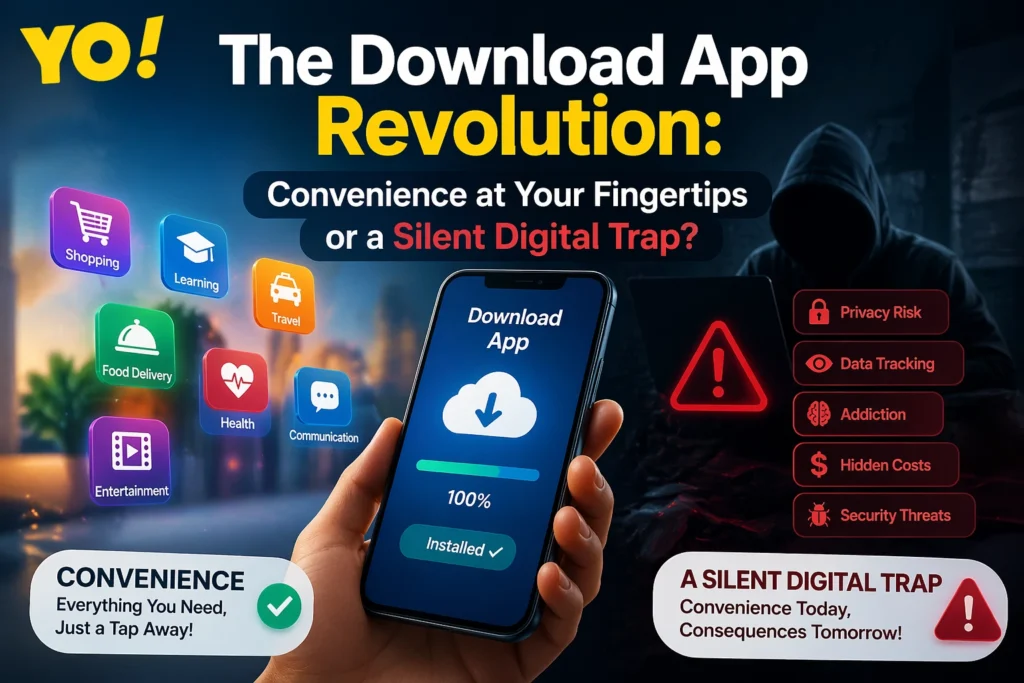
Introduction: The Power Behind Every “Download App” Decision
In a world driven by smartphones and instant access, the simple act to download an app has become second nature. From managing daily tasks to staying connected with people across the globe, apps have transformed how individuals live, work, and interact. What once required time, effort, and physical presence can now be achieved within seconds—just by tapping a button.
The phrase “Download App” is no longer just a technical instruction; it represents a digital lifestyle. Every time a user chooses to download an app, they are stepping into a new experience—one that promises convenience, speed, and personalization. However, this ease also comes with important considerations, including privacy, dependency, and digital overload.
As apps continue to dominate everyday life, understanding the impact of each download becomes essential. This article explores not only the advantages of choosing to download an app but also the hidden consequences that often go unnoticed.
The Evolution of the “Download App” Trend
The journey of the “Download App” culture reflects the rapid growth of technology and changing human behavior. In the early days of mobile phones, functionality was limited—devices were primarily used for calling and texting. There was no concept of app stores or instant downloads. However, as smartphones emerged, they introduced a new ecosystem where users could expand their device capabilities simply by choosing to download an app.
The launch of app marketplaces marked a turning point. Suddenly, users had access to thousands—and eventually millions—of applications designed for every possible need. Whether it was entertainment, productivity, health, or finance, the ability to download an app became a gateway to endless possibilities.
Over time, this behavior evolved into a habit. People no longer question whether they should download an app—they expect to. Need food? Download an app. Want to learn something new? Download an app. Looking for entertainment? Download an app. This shift has turned smartphones into multi-functional hubs that replace traditional tools and services.
As technology advanced further, apps became smarter and more user-focused. Features like artificial intelligence, real-time updates, and cloud integration enhanced user experiences, making the decision to download an app even more appealing. Today, apps are not just tools—they are ecosystems that continuously adapt to user preferences.
This evolution highlights how deeply embedded the “Download App” concept has become in modern life, shaping not just technology usage but also consumer expectations and behavior.
Why People Instantly Choose to “Download App”
The decision to download an app often happens within seconds—but it is rarely random. Behind this quick action lies a combination of convenience, psychology, and modern digital expectations. Understanding why users feel compelled to download an app reveals how deeply this behavior is rooted in everyday life.
One of the biggest drivers is instant problem-solving. When users face a need—whether it’s booking a ride, ordering food, or editing a photo—the fastest solution is often to download an app. The promise of immediate results makes the decision feel effortless and logical.
Another key factor is ease of use. Most apps are designed with simple interfaces and guided onboarding, making them accessible even to non-technical users. This removes hesitation and encourages users to download an app without overthinking.
Social influence also plays a powerful role. People are more likely to download an app if it is recommended by friends, trending online, or widely used. Popularity builds trust, and trust drives action.
Additionally, exclusive benefits push users toward downloads. Many platforms offer app-only discounts, rewards, or features that are not available elsewhere. This creates a sense of urgency and makes users feel they might miss out if they don’t download the app.
There is also the element of curiosity and experimentation. With millions of apps available, users are constantly exploring new tools, games, and platforms. The low cost (often free) reduces risk, making it easy to try something new.
Finally, habit formation reinforces this behavior. Once users become accustomed to solving problems through apps, downloading becomes their default response. Instead of searching for alternatives, they instinctively choose to download an app as the quickest solution.
Together, these factors explain why the “Download App” action has become almost automatic—shaped by both human psychology and the convenience-driven digital world.
The Benefits of Choosing to “Download App”
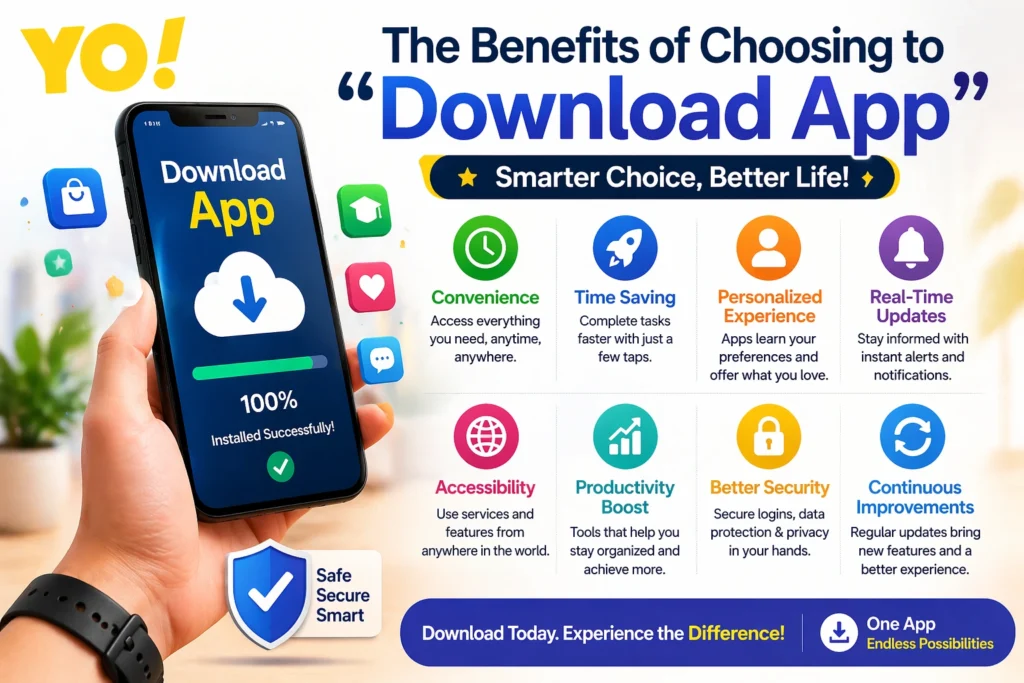
Deciding to download an app often brings immediate advantages that simplify and enhance everyday life. From saving time to improving efficiency, apps have become powerful tools that cater to both personal and professional needs.
One of the most noticeable benefits is convenience. Instead of visiting physical locations or navigating complex websites, users can complete tasks within seconds. Whether it’s paying bills, shopping, or booking services, choosing to download an app streamlines the entire process.
Another major advantage is time efficiency. Apps are designed to perform specific functions quickly and effectively. With features like saved preferences, auto-fill options, and quick navigation, users can accomplish tasks much faster than traditional methods.
Apps also provide a personalized experience. Once you download an app, it begins to understand your behavior—offering recommendations, reminders, and content tailored to your interests. This level of customization enhances user satisfaction and engagement.
In addition, many apps offer real-time updates and notifications. From delivery tracking to financial alerts, users stay informed instantly. This immediacy helps people make quicker and better decisions in their daily lives.
Another important benefit is accessibility. Apps bring services to users regardless of their location. Whether someone lives in a large city or a remote area, downloading an app can provide access to opportunities that might otherwise be unavailable.
Apps also support productivity and organization. Tools for scheduling, note-taking, and collaboration help individuals manage their time and responsibilities more effectively. A simple decision to download an app can lead to better planning and improved workflow.
Finally, there’s the advantage of continuous improvement. Developers regularly update apps with new features, security enhancements, and performance upgrades. This means that once users download an app, their experience keeps evolving without needing to switch platforms.
These benefits explain why the “Download App” trend continues to grow—offering users a faster, smarter, and more connected way to navigate modern life.
The Hidden Risks Behind Every “Download App”
While the decision to download an app often feels harmless and beneficial, it also carries risks that many users overlook. Beneath the surface of convenience lies a complex landscape of privacy concerns, digital dependency, and potential security threats.
One of the most serious issues is data privacy. When users download an app, they are often required to grant permissions—access to contacts, location, camera, or storage. In many cases, these permissions are accepted without careful review. This can lead to personal data being collected, stored, or even shared without full awareness.
Another growing concern is security vulnerability. Not all apps are created with strong security standards. Downloading apps from untrusted sources or even poorly secured official apps can expose devices to malware, hacking attempts, or data breaches. A single careless download can compromise sensitive information.
There is also the issue of digital addiction. Many apps are intentionally designed to keep users engaged for as long as possible. Features like endless scrolling, notifications, and reward systems can create compulsive usage patterns. Over time, this can impact mental health, reduce productivity, and disrupt real-world interactions.
Performance and storage problems are another downside. Each time users download an app, it consumes storage space, battery life, and processing power. Too many apps can slow down devices, cause frequent crashes, and reduce overall efficiency.
Additionally, hidden costs can catch users off guard. While many apps are free to download, they often include in-app purchases, subscriptions, or ads. Users may end up spending more than expected after installing an app.
There is also the risk of information overload. With multiple apps sending constant notifications, users can feel overwhelmed and distracted. This continuous digital noise can reduce focus and increase stress levels.
Finally, dependency on apps can reduce problem-solving skills and independence. Instead of thinking critically or finding alternative solutions, users may rely entirely on apps for even simple tasks.
These hidden risks highlight an important truth: while it is easy to download an app, it is not always harmless. Being aware of these challenges is essential for making smarter and safer digital choices.
The Future of the “Download App” Experience
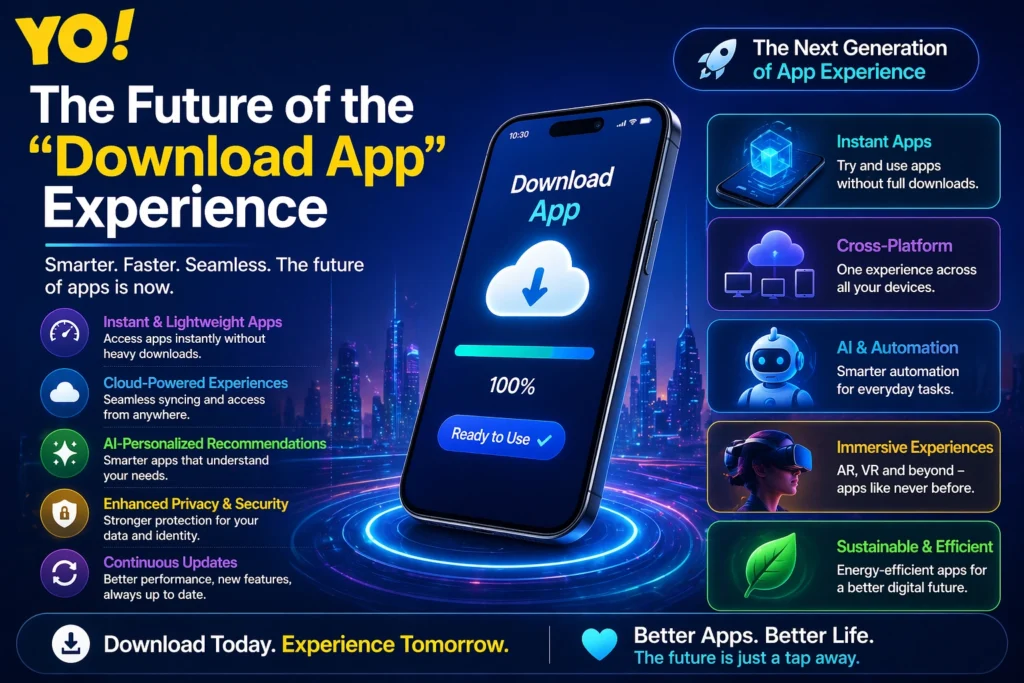
The way people download an app today is already evolving, and the future promises even more transformation. As technology advances, the traditional concept of downloading and installing apps may gradually shift toward faster, lighter, and more integrated solutions.
One major development is the rise of instant apps. These allow users to access app features without completing a full download. Instead of waiting for installation, users can instantly open and use specific functionalities. This reduces storage usage and removes friction from the user experience.
Another significant shift is toward cloud-based applications. In this model, much of the processing happens online rather than on the device itself. Users may no longer need to download an app in the traditional sense, as services become accessible directly through browsers or lightweight interfaces.
The emergence of super apps is also reshaping the landscape. Instead of downloading multiple apps for different purposes, users can rely on a single platform that offers messaging, payments, shopping, and more—all in one place. This reduces the need to repeatedly search and download apps for individual tasks.
Artificial intelligence will further enhance how users interact with apps. Future systems may predict user needs before they even search, suggesting when to download an app or eliminating the need altogether by integrating services seamlessly into existing platforms.
Security and privacy are also expected to improve. As awareness grows, developers will likely focus more on transparent data policies and stronger protection measures, making the decision to download an app safer and more trustworthy.
At the same time, user behavior will continue to evolve. People may become more selective, choosing quality over quantity rather than downloading apps impulsively. Minimalism in digital usage could become a growing trend.
The future of the “Download App” experience is not just about more apps—it’s about smarter, faster, and more meaningful interactions. As innovation continues, the simple act of downloading an app may transform into something far more seamless and intuitive, redefining how we connect with technology.
Conclusion: Rethinking Every “Download App” Choice in a Digital-First World
The simple act to download an app may seem small, almost insignificant in the moment—but when viewed collectively, it defines how modern society interacts with technology. From the first smartphone experience to today’s app-driven lifestyles, the phrase “Download App” has evolved into a symbol of convenience, innovation, and instant gratification. Yet, as powerful as this action is, it carries equal responsibility.
Every time a user chooses to download an app, they are not just installing software—they are inviting a digital tool into their personal space. This tool can improve productivity, simplify tasks, and enhance communication, but it can also demand attention, collect data, and influence behavior. The impact of a single decision to download an app often extends far beyond its intended purpose.
Throughout this discussion, one thing becomes clear: the “Download App” culture is a double-edged sword. On one side, it empowers individuals with access to endless opportunities—learning platforms, business tools, health trackers, and entertainment hubs. On the other side, it introduces risks such as privacy concerns, digital dependency, and information overload. The balance between these two sides depends entirely on how consciously users make their choices.
In today’s fast-paced environment, people often download an app without thinking twice. A recommendation, an advertisement, or a moment of curiosity is enough to trigger the action. However, this impulsive behavior can lead to cluttered devices, reduced efficiency, and unnecessary distractions. Over time, the habit of constantly choosing to download an app can create a digital environment that feels overwhelming rather than helpful.
This is why awareness is crucial. Before deciding to download an app, users should pause and ask themselves whether the app truly adds value. Is it solving a real problem, or is it just another temporary interest? Will it improve daily life, or will it become another unused icon on the screen? These simple questions can transform the way people engage with technology.
At the same time, it’s important to recognize that choosing to download an app is not inherently negative. In fact, when done wisely, it can be incredibly empowering. The right apps can save time, boost productivity, provide education, and even improve mental and physical well-being. The key lies in intentional usage rather than habitual downloading.
Looking ahead, the concept of “Download App” will continue to evolve. With innovations like instant apps, cloud-based platforms, and super apps, the need to repeatedly download an app may decrease. Technology will likely become more integrated, reducing friction while enhancing user experience. However, even as the process changes, the underlying decision-making responsibility will remain with the user.
Ultimately, the power of the “Download App” action lies not in the technology itself, but in the choices people make. It is not about how many apps you download, but how wisely you choose them and how effectively you use them.
In a world where everything is just one tap away, the smartest move is not to stop downloading—but to start thinking before you do.
Frequently Asked Questions (FAQs) About “Download App”
1. What does “Download App” actually mean?
The term “Download App” refers to the process of installing a mobile or desktop application onto your device. When you download an app, you are adding software that allows you to perform specific tasks such as communication, entertainment, shopping, or productivity.
2. Is it safe to download an app from any source?
No, it is not always safe to download an app from unknown sources. It is recommended to download apps only from trusted platforms to avoid malware, data theft, or security risks. Before you download an app, always check reviews, ratings, and permissions.
3. Why do apps ask for permissions after you download an app?
When you download app, it may request access to features like your camera, location, or contacts to function properly. However, users should be cautious and only allow permissions that are necessary for the app’s purpose.
4. How many apps should I download on my phone?
There is no fixed number, but it’s best to download app that you actually use. Too many apps can slow down your device and create digital clutter. Being selective when you download app helps maintain performance and focus.
5. Can downloading apps affect phone performance?
Yes, every time you download app, it uses storage, memory, and battery. If you download too many apps, your phone may become slower and less efficient over time.
6. Are free apps really free to download?
Most download app are free to download, but they may include ads, in-app purchases, or subscriptions. Always check details before you download an app to avoid unexpected costs.
7. How can I safely choose which app to download?
Before you download an app, consider these points:
- Check user reviews and ratings
- Verify the developer’s credibility
- Review permissions carefully
- Ensure it serves a real purpose
Making informed decisions ensures a safer experience.
8. Where can I learn more about safe app usage?
You can explore helpful insights and guides on safe digital practices by visiting this internal resource:
👉 yobookonline
9. Are there platforms that offer app-related opportunities or insights?
Yes, some platforms provide additional information, trends, or opportunities related to apps and digital usage. You can explore one such external platform here:
👉 dream11global
10. What is the future of the “Download App” concept?
The future of “Download App” is moving toward faster and smarter solutions like instant apps and cloud-based platforms. Users may not always need to fully download an app, as technology continues to evolve toward seamless access.
These FAQs highlight the importance of making smart decisions every time you choose to download an app, ensuring both convenience and safety in your digital journey.